Navigating the Changing Landscape of Print

Change is everywhere. From how we order groceries, to how we get around, to how we access information . . . our entire lives are saturated in change. I think of these as structural changes in our day-to-day living.

But there’s also the human aspect – changes in culture, or how we live our lives, or what is acceptable today that was taboo even ten years ago.

Shifts happen when new generations come along, due to different levels of life experience and the perpetual evolution of culture. At my age, I have a long history of experiences – both successes and failures – to draw from. A recent college graduate or student out of high school, however, would have a completely different perspective on what change is and what it means to people of their generation.

In the printing industry, there’s a lot of bellyaching about how things are changing. Printers complain that customers aren’t buying envelopes and letterheads anymore. People are printing business cards on a home printer, or ordering online for next to nothing. We even had a request come in the other day from a customer, saying that they didn’t care what the cards looked like as long as they were cheap!

My point is that no matter what business you’re in, you not only have to accept change, you also have to be prepared to embrace it. Whether it’s in the realm of employees, technology, demand for products, or customer expectations, if you want to survive you have to be able to adapt and evolve. Otherwise, you and your business will become a memory.

That said, adapting and evolving doesn’t necessarily mean throwing out all the old ways – it’s being smart enough to know what works best in any given context. We can fulfill orders the same day, because we have the technology that makes it possible. We tackle difficult jobs, because unlike an online printer, we don’t have narrow guardrails that every job has to stay within. Any order, no matter how small or specific, is appreciated.

There is no substitute for good old-fashioned human interaction, though. Although we have the ability for customers to order online, we also have a live person answering the phone. We like to talk to customers, get a feel for their needs and requirements, and have real conversations. Customers notice this, too. We got an email this week from a graphic artist who is a frequent customer. One of their clients insisted on using another printer for a particular job, and the printer did not even acknowledge that the art had been received. The job was delivered to the client without any communication at all with the graphic artist. The client, needless to say, was not impressed.

Too many businesses equate efficiency with simply getting things done quickly, but customers expect and deserve more than that.

Change is a good thing, and nothing to be afraid of . . . but you have to be smart about it. We aim to stay on the edge of technological changes in our industry, while retaining the traditional values of service that let customers know we care. It’s a balance that we strive for with every order that comes in.


How to Prepare for a Strong Start to 2020

Who wants to think about the new year in September? It may seem a bit premature, but for business owners, the end of 2019 will be upon us before we know it. If you don’t start preparing soon, you’ll take your business into 2020 without a clear sense of direction for what you want to accomplish. The best time to start getting your ducks in a row is right now, but what are the most productive ways to set yourself up for strong growth as we finish one year and start a new one?

One last marketing push. There’s still time for 2019 to shine, so take advantage by pulling out all the stops. Email may be the easiest place to start, but don’t forget the power of printed promotions.

A holiday card that means something. So many businesses send out a generic, cheap-looking card that was clearly a last-minute afterthought. No one wants to receive that; it’ll go straight in the trash. If you start now, you have plenty of time to make a statement by creating a card that is interesting, personal, and well-designed. Don’t wait until the first week of December to start thinking about this!  Show your customers that you care about the little details.

An end-of-the-year customer survey. Were your customers happy with your business this year? Is there any service or product they wish you would start offering? Are they even familiar with all the services you currently provide? A year-end survey with carefully-constructed questions can provide you with both clarity and direction. Doing this may feel a lot like the dreaded performance review, but that’s a good thing – it’ll give you the information you need to start making adjustments to any plans you have for the next year.

A look ahead to the 2020 trade shows. Be honest: how long has it been since you freshened up your booth and marketing materials? At the very least, you probably need to have a few things reprinted, but while you’re at it, this is a good opportunity to look over everything you have and assess the need for editing and rewriting, updates to your designs, or even a complete rebranding.

With the holidays just around the corner, we’re heading into a great time of year full of parties and customer events. Don’t forget, though, that it’s also a time to reflect on what you’ve accomplished this year, and start making plans and taking action to get ready for 2020.

Three Keys to a Successful Nonprofit Fund Appeal

Almost everybody has a story of exasperation with fundraisers. It can either be from the perspective of an organization struggling to collect donations, or from the standpoint of receiving repeated requests to give. There is donor fatigue as fundraising appeals grow every year. Maybe it’s a stretch to say that anyone really enjoys the fundraising process, but people genuinely do want to help, and if you go about your fund appeal in the right way, you can not only get more repeat donations, but more first-time donors, as well.

The most important aspect of making a good fund appeal is to create a compelling narrative. People like stories that will touch them, and emotional connections are what lead to larger and more frequent donations. You can’t just use the same tired appeal script over and over – although it seems like less work in the short term, people will learn to tune it out, like any repetitive advertising. Instead, explain the problem that your organization aims to tackle, tell real and recent stories of people who are affected by this problem, and let that drive your fund appeal forward.

You also want to make sure that you keep your messaging and donation process simple and clear. Sure, there are probably hundreds of things that your organization needs, and just as many ways that people could help out with those things, but the main issue right now is that you want people to donate, so don’t bore them with a lot of irrelevant complications. As we discussed before, one of your main goals in any venture should be to make things as convenient as possible, so remove as much friction as you can for your donors. Prepopulate the donor card with whatever information you have available, for example the donor’s name and address. You can also take the guesswork out of deciding on an amount by mentioning that the donor gave $X last year, and suggesting that the donation could be increased to $Y this year. When it comes to asking for money, keep it straightforward, simple, and transparent.

Lastly, don’t overlook the design of your fund appeal materials. We all know that how things look matters, so don’t leave this as an afterthought. Strong branding and imagery may feel like blatant marketing tactics, but that is in fact the boat you’re in – you have a message that needs to reach people, and it needs to penetrate the wall of thousands of other marketing messages that people are bombarded with every day. How does your design stand out from the rest? You can achieve a lot with the right choices of text, paper, and incorporating the use of die-cutting. If your appeal has a strong visual component, reflected in good design and image choices, you’ll have a lot better chance of your signal sounding out clearly above the rest of the noise.

It can be tricky to find the perfect equilibrium with a fund appeal – don’t hesitate to ask us if you need help moving in the right direction.

Is Your Process Driving Customers Away?

We opened Stafford Printing just over 32 years ago.  At that time, a black-on-white thermographic business card – meaning it had raised print – would take about three weeks to produce from start to finish. As the fax machine became commonplace, an order could be faxed to the manufacturer, and we would in turn receive a proof back in a few days, which we would then fax to the customer.

Everyone was happy with this back-and-forth process. Three weeks was considered a reasonable time frame from order to delivery. A rush order – where a frantic client might say that they needed the cards within a week – would be produced in-house for delivery just in the nick of time!

Of course, times and technology have changed over the years, and so have our expectations about ease of production and turnaround.  Some industries and companies have kept up with these developments; others have remained mired in the old, more labored ways of doing things.

I thought about this today as I filled out forms in the doctor’s office. Even though there have been no changes to my personal information, I was handed three sheets of paper, two of them printed front-to-back, and I was instructed to re-fill out the forms.  I couldn’t imagine why this was necessary, since they already have all my information. It was frustrating, and it made me want to hand over a copy of Shep Hyken’s Convenience Revolution.

In his book, Hyken writes about how to deliver a customer service experience that disrupts the competition and creates fierce loyalty. The secret sauce: reduce friction between you and the customer; be convenient. Answer the phone when a client calls instead of having them navigate a phone tree. Make the ordering process efficient and easy to understand. Communicate clearly regarding job completion and delivery.  In short, make things as easy and frictionless for your customer as possible. Don’t make them do unnecessary work.

I believe Stafford Printing is a good company. Our goal is to be great. Making it easier to do business with us is a goal we work toward every day. Thank you for being on the journey with us. We appreciate your business, support and loyalty.

Why the Visual Aspects of Your Business Are So Important

Business owners have a lot on their minds. There are so many moving parts to running a successful business, that often the more creative aspects get put on the back burner. It’s important to remember, though, that creativity can actually help move your business forward in several crucial ways.

Branding is the glue that holds everything together. When was the last time you looked at your logo with a critical eye? Your logo is the company brand and is usually the first visual that pops into your head when thinking of a company. Stafford Printing’s swirling O in Stafford and the arc that wraps from the R in Printing to the swirl is memorable. Customers often comment about our logo and it has remained in place for over 25 years. Owner Howard Owen commented that the swirl represents the energy of the employees at SP because it can get crazy manufacturing orders on a moment’s notice!

A consistent branding strategy is essential for any business, and although that includes a wide range of things like establishing company tone and messaging, the visual features of branding should never be underestimated. Think about how many brands you can recognize simply by their logo or font – how things look really does make a difference to how memorable your company is.

A strong visual impact brings in customers. In most cases, the first contact a customer has with a business is something they see: an advertisement, a website, or maybe even a product in its packaging. First impressions matter, so you want that initial contact to have as great an impact as possible. Like it or not, looks are important in this regard – after all, most people buy wine based on which label they like best, and consumers will naturally be drawn toward companies that have clearly put some thought into their graphic design strategy.

Simply put, people enjoy things more if they’re pleasing to the eye. Have you ever received a stunningly beautiful invitation to an event, or flipped through a luxury product brochure that was really high quality and well-designed? There’s something undeniably satisfying about the experience. So whether you’re trying to court new business, create something fun for the people in your office, or announce a new and exciting development, it’s always going to be more enjoyable for everyone if it looks great.

Creativity and passion go hand-in-hand. Sure, there are a lot of important parts of a business that aren’t particularly glamorous – crunching numbers, making business plans, and organizing all the legal paperwork. What makes it all worth it, though, is the first time you see your newly-designed logo printed on your business cards, or the name of your business displayed across a huge sign. it’s a feeling like none other, and that sort of motivation can really drive you to remember why you wanted to go into business in the first place.

Don’t let the visual components of your business be an afterthought – work with a skilled designer and a quality printing service, and make sure you get all the great-looking materials that your business and its customers deserve to have.

Unique Printing Ideas

By HOWARD OWEN

As 2019 gets under way, I want to share three unique printing ideas with you. All three touch on different areas of your work life.

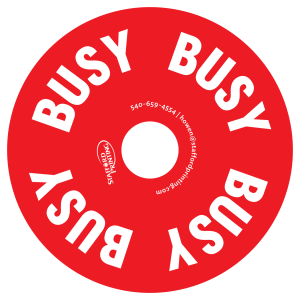
First, for in the office. Sometimes your door is shut because you want quiet. Is it sending the wrong message to co-workers? Stafford Printing developed a solution. Much like hotels have do not disturb cards, SP created a Busy/Available door hanger. So even when my door is shut, if the hanger says available, people are free to walk in. Of course, busy means busy! Some clients have taken this to a different level – Go Away/Come In; Leave Me Alone/Please See Me. You get the point.

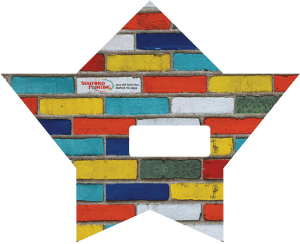
Second, for reaching out to customers. Instead of the traditional letter and card, we utilize the “Star” letter. It’s a card die cut in the shape of the star that folds to a business envelope. Instead of two sheets paper, we use one. We write our message on the inside, fold up four sides, and attach a die cut label. It’s a perfect way to communicate with your clients and the ability to use different designs is a great way to make sure your client is opening the letter and seeing your message. You are standing out!

Third, personalized pocket folders for your prospects. If you’re delivering a proposal to an organization, how better to present yourself and your company than with a personalized pocket folder. The variable can be anywhere. For example, if you’re presenting to a department, each employee can receive the proposal in a folder with their name on the cover. The extra effort in doing this will more than likely keep the folder front and center because it has the person’s name on it.

These three products are all produced in house at Stafford Printing for our own use, but we’re happy to adapt them if they may be useful in your company as you touch base with your customers or seek out new clients.

We have pdf’s for all of these…you can download them here:

Get the door hanger die-lines here

Get the star letter die-lines here

Get the mini pocket folder die-lines here

Available Die-Cut door hanger
Busy Die-Cut door hanger
Star Mailer
Pocket folder

Surveying Your Customer


Surveying Your Customer . . . or finding out if there is friction that is preventing the customer from doing more with your company!

There are a number of software programs available today that you can use to survey your customer. Stafford Printing has been engaged in such a program for a client for almost 10 years, which in itself is an indication of the success of the program. The astounding response rate of the survey, and the valuable data collected, gives our client’s customer service team so much information it takes months to digest and follow up with the respondents.

The survey only asks two questions designed to measure customer loyalty. One question is about the quality of their experience and the other about the likelihood they would refer the company. Because the questions are easy to answer – on a scale of one to ten – and the responses are on a postage paid postcard, it is incredibly easy to complete. Another important component is the comments section. So much valuable information is collected, and the company is able to use it to improve customer service and solicit new customers.

The second part of the headline – about friction – is often not considered when businesses look to enhance customer service. Are there friction points in your business? Are customers spending too much time on hold or standing in line? Are they having to be patient to do business with your company because your website is slow or not up to date, or doesn’t do what it should?

We are the midst of a transformation – think Amazon! To learn more about this, I suggest reading or listening to The Convenience Revolution, How to Deliver a Customer Service Experience that Disrupts the Competition and Creates Fierce Loyalty by Shep Hyken – https://hyken.com/online-store/the-convenience-revolution/.

Companies typically choose a focus – customer service, operations, or sales, for example. I like to think Stafford Printing is customer focused. We aren’t perfect, just like computers, but we try hard to satisfy our clients and provide services that help them grow their businesses. We see this as our only reason to exist!